zaterdag 4 februari 2012

Gazprom benefiting from Europe's snow: OGZPY

Natural gas prices have been plummeting more than 50% since its peak in 2010 and is attributed to the huge oversupply in natural gas. More and more natural gas has been found while consumption doesn't keep up with supply. But as Marc Faber famously quotes: "The best time to buy commodities is when markets are glutted". This is because the prices are the most depressed during these times. One company that I highly recommend is Gazprom (OGZPY), due to its exposure to natural gas and oil. To see why I recommend to buy Gazprom please go to my article located here: Gazprom benefiting from Europe's snow: OGZPY

It's important to monitor the Russian natural gas price which can be found here:
http://www.indexmundi.com/commodities/?commodity=russian-natural-gas&months=60

Notable is that natural gas prices in America are plummeting, while Russian natural gas prices are going up.

vrijdag 3 februari 2012

Sun Hung Kai Properties: a good buy

Hong Kong is one of the best parts of Cina to invest in real estate. The Centa City Lead Index, which tracks the secondary private residential property price in Hong Kong is still in an uptrend, despite some weakness in 2011. 

Centa City
Centa City Lead Index

I highly recommend Sun Hung Kai Properties to benefit from this uptrend. This company is strong in Hong Kong and also has property in China: Shanghai, Beijing... So let's look at the Shanghai property index. The one year chart looks like it's bottoming out.
Shanghai Property
Shanghai Property Index


The long term chart of Sun Hung Kai Properties is bottoming out as well and correlates very well with the Shanghai Property Index chart.
Sun Hung Kai properties
Sun Hung Kai Properties SUHJY

And last but not least: Marc Faber bought Sun Hung Kai Properties at the end of last year as disclosed in this video.


donderdag 2 februari 2012

New Gold: The Perfect Storm for Growth

As the gold correction has almost run its course, it's time to once again benefit from the rise of gold by buying into gold mining stocks. One nice growth story is New Gold (NGD).

New Gold has 3 operating properties: Mesquite, Peak Mines and Cerro San Pedro Mine with altogether approximately $US 200 million net cash flow. The market cap of New Gold is $US 5.54 billion with a price to book value of 2.5. This corresponds with a P/E of 24.78. Cash costs of the projects are coming down, while production is steadily increasing. You could think this is very pricey, but the secret lies in its development projects of which the cash flow will grow at an exponential pace.

New Gold has 3 development projects: New Afton, El Morro and Blackwater. These properties will propel NGD exponentially. To see how, please visit my article at: Seekingalpha

woensdag 1 februari 2012

Marc Faber Slovenia Resource Conference 2008

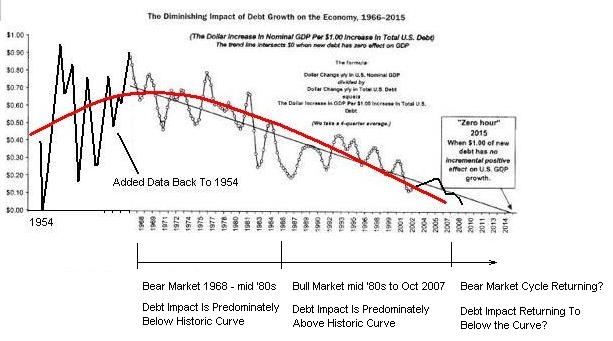
For those who haven't seen the Slovenia resource conference in 2008 by Marc Faber, here it is. The most important chart in the presentation was the Zero hour graph (part 7), pointing to hyperinflation. Everyone needs to watch this to understand what is going on.

video

video

video

video
video

video video

video

maandag 30 januari 2012

Central banks shifting to gold

There has been much talk about central banks becoming net buyers of gold since the start of the economic crisis in 2008. I want to elaborate on that.

The world gold council (WGC) yearly reports on the amount of central bank gold sales. As of 2010, central banks have shifted from net sellers to net buyers of gold (Figure 1). And this has only happened recently! As we look at history, during the inflationary years of 1980, central banks were buying gold. Then a period of gold selling occured from 1989 till 2009 where gold went into a bear market. Central banks only shifted to buying gold since 2010. Which means we are going straight back into a bull market of gold.

Central bank net buyers of gold
Figure 1

The WGC expected growth in gold buying from central banks to continue throughout 2012. The projected growth of central bank gold buying was projected to be 336 tonnes of gold per year in 2011 (Figure 2). Their predictions were right as central banks added 450 tonnes during 2011.

increase gold central banks
Figure 2

By far, the increase in interest in gold is the highest within the sector of central banks as opposed to investment, bars, coins and ETF's (Figure 3).

gold holdings central banks
Figure 3

The top among those countries that increased their gold holdings in 2011 are: Mexico, Russia, Thailand, Bolivia, Korea (Figure 4). More recently, we see activity from Mongolia and Kazachstan.

central banks increase gold holdings
Figure 4


Conclusion: Central banks know there is something going wrong with our fiat currency system. Otherwise they wouldn't shift to buying gold, which started coincidentally after 2008: the year of the global financial crisis where money supply exploded. I suggest that we investors follow the big guys into buying gold, you don't want to be left behind.

zondag 29 januari 2012

Agriculture turning around?

At the beginning of 2012 agriculture prices are starting to turn around after the big correction that occured in 2011. Speculators have started to add net long positions in agriculture due to drought concerns in South America. Global demand is still going up.

Soy Bean prices are going up on dry weather in Brazil and Argentina.
Palm Oil prices benefit from the problems in the Soy Bean crops.
Cotton prices are improving but are still weak. Cotton prices are bottoming out though.
The rubber market is likely to continue the uptrend due to bad weather conditions. Demand for rubber is strengthened by the buying up to the Lunar New Year.
Wheat prices are still weak due to large wheat production.
Coffee prices had a surge in 2010 and were correcting in 2011. Prices will remain firm though due to supply shortages.
Sugar is in an uptrend, but speculators are turning bearish.
Corn prices are weak due to a surplus in inventory, but seem to be bottoming out.
Rice prices are turning in a downtrend as India starts exporting more rice to the world.

Overall, we can say that agriculture prices are in the process of bottoming out, but I wouldn't count on making money here because wheat, corn and cotton (the three biggest agricultural commodities) are still in oversupply.